
Driveway Materials

What's The Difference Between Concrete And Asphalt?

Concrete and asphalt can both create driveways, but Perth heat, maintenance needs and design goals make the choice important.

What’s the Difference Between Concrete and Asphalt?

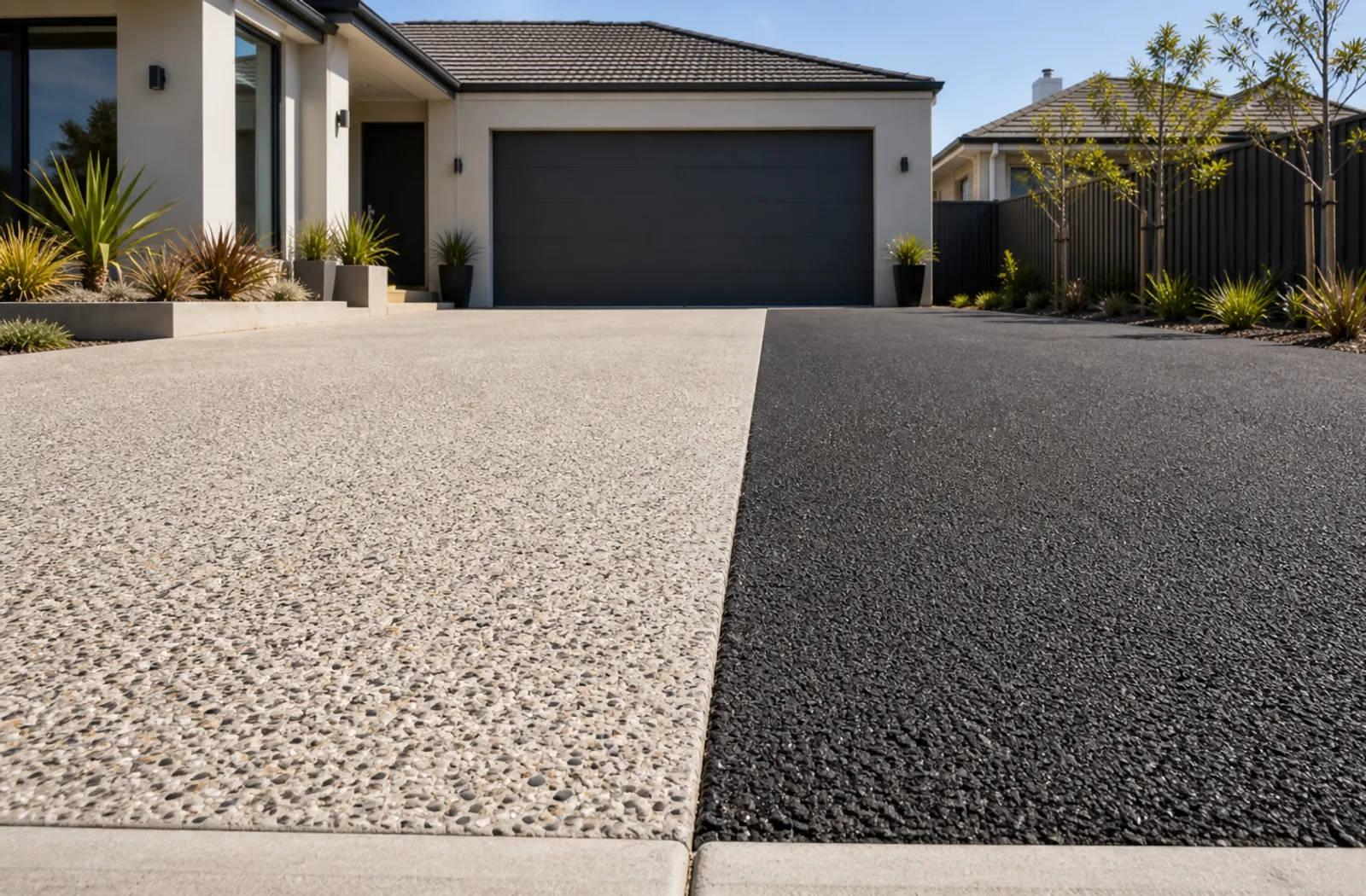
Before we dive into which is better, it helps to understand what you’re actually comparing. Concrete is made from cement, sand, and aggregate — poured as a solid slab that cures hard and rigid. Asphalt driveway Perth installations, on the other hand, use a mix of bitumen and crushed stone — a flexible, darker surface that’s rolled and compacted rather than poured.

Both are durable. Both are widely used. But they perform very differently over time — and in Perth’s climate, those differences matter more than you might think.

Project Details

Get A Free Estimate

Tell us about your concrete driveway project, access, surface condition and timing so we can respond with practical next steps.

Photos, approximate measurements and access notes help us respond with clearer advice.

How Perth’s Climate Affects Your Choice

Perth is one of the hottest, sunniest cities in Australia. Summers regularly push past 40°C, and UV exposure is intense year-round. This is one of the most important factors when choosing between concrete and asphalt driveway Perth homeowners often overlook.

Asphalt softens in extreme heat. On a 42°C Perth summer day, an asphalt driveway can become tacky underfoot — and heavy vehicles like caravans or trailers can leave indentations. Concrete, being rigid, handles heat far better and won’t deform under load.

In winter, Perth’s mild temperatures mean the ground freeze-thaw cycle that damages concrete in colder climates simply isn’t a concern here. This removes one of asphalt’s traditional advantages over concrete in colder parts of the world.

The verdict for Perth’s climate? Concrete holds up significantly better year-round.

Upfront Cost — Concrete vs Asphalt Driveway Perth

Asphalt is generally cheaper to install upfront. As a rough guide for Perth homeowners:

Asphalt driveway Perth installations typically start from around $25 – $40 per square metre for a standard residential driveway. Concrete starts from $65 – $85 per square metre for a plain brushed finish, rising to $100 – $160+ for decorative options like exposed aggregate or stamped concrete.

So on a 50m² driveway, you might pay $1,250 – $2,000 for asphalt versus $3,250 – $4,250 for plain concrete. That’s a meaningful difference upfront.

However, upfront cost is only part of the story.

Long-Term Cost — Which Is Cheaper Over Time?

This is where concrete starts to win back ground. A well-installed concrete driveway in Perth can last 30 to 40 years with minimal maintenance. Asphalt typically needs resurfacing or significant repairs every 10 to 15 years — and requires re-sealing every 3 to 5 years just to maintain its condition.

Over a 30-year period, the total cost of ownership for an asphalt driveway Perth property often equals or exceeds that of concrete — once you factor in resealing, crack repairs, and eventual resurfacing. Concrete costs more on day one, but you spend far less on it over the life of the driveway.

Appearance and Kerb Appeal

Let’s be honest — this is where concrete wins convincingly for most Perth homeowners.

Concrete offers a wide range of finishes: plain brushed, exposed aggregate, honed, coloured, stencilled, and stamped. You can match it to your home’s exterior, complement your landscaping, and create a driveway that genuinely adds to your property’s value and visual appeal.

Asphalt comes in one look — dark grey to black. It can look clean and tidy when freshly laid, but it fades, oxidises, and stains over time. There’s very little you can do to personalise it.

If kerb appeal matters to you — and in Perth’s competitive property market, it absolutely should — concrete gives you far more to work with.

Durability and Maintenance

Concrete is harder and more rigid, which means it resists cracking under normal residential loads very well. When cracks do occur, they tend to be localised and repairable. The surface doesn’t degrade from UV exposure the way asphalt does.

Asphalt is more flexible, which can be an advantage in areas with significant ground movement — but in Perth’s relatively stable sandy soils, this flexibility isn’t a major benefit. Asphalt is also more susceptible to damage from fuel, oil, and chemical spills — which can soften and break down the bitumen binder over time.

For a residential asphalt driveway Perth property, you’re looking at regular sealing, crack filling, and eventual resurfacing as part of the ongoing maintenance routine. With concrete, a periodic pressure wash and re-seal every few years is typically all that’s needed.

Environmental Considerations

Neither concrete nor asphalt is particularly eco-friendly to produce — both have significant embodied energy in their manufacturing. However, concrete driveways last significantly longer, which means fewer replacement cycles and less material waste over time.

Concrete can also be finished in lighter colours that reflect heat rather than absorbing it — a meaningful benefit in Perth’s hot summers, reducing the urban heat island effect around your home. Dark asphalt absorbs and radiates heat, which can make outdoor areas noticeably warmer in summer.

Which One Should You Choose?

For most Perth homeowners, concrete is the better long-term choice. It performs better in Perth’s heat, lasts longer, looks better, offers far more design options, and costs less to maintain over its lifetime. The higher upfront cost is a genuine consideration — but for most families, it’s an investment that pays off.

Asphalt might make sense if your budget is tight and you need a functional driveway right now, or if you’re planning to sell the property in the near future and want to minimise spend. But if you’re staying in your home and want a driveway you’re proud of for decades to come, concrete is the clear answer for Perth conditions.

Still not sure? Talk to one of our team — we’re happy to walk you through the options for your specific property, budget, and goals with no pressure and no obligation.

Quick Comparison Summary

Choosing between a concrete and an asphalt driveway comes down to weighing upfront cost against long-term value. Asphalt is cheaper to install — around $25–$40 per square metre versus $65–$160+ for concrete — making it attractive for tight budgets. However, concrete pulls ahead in nearly every other category.

Here's how they stack up at a glance:

  • Upfront cost — asphalt is cheaper to install
  • Lifespan — concrete lasts 30–40 years; asphalt 10–15 years
  • Heat performance — concrete handles Perth summers far better
  • Maintenance — concrete needs less; asphalt requires frequent resealing
  • Design — concrete offers dozens of finishes; asphalt has one look
  • Long-term cost — concrete is comparable or cheaper over time

For most Perth homeowners, concrete is the better all-round investment, delivering durability, style, and value that easily outweigh its higher initial price tag.

Lifespan

When it comes to longevity, concrete is the clear winner. A well-laid concrete driveway can last 30–40 years with only minimal maintenance, easily outlasting asphalt and proving its worth as a long-term investment for your property.

Asphalt, by comparison, typically lasts just 10–15 years before it needs major resurfacing or full replacement. Its softer, flexible surface is more prone to cracking, rutting, and deterioration over time — particularly under heavy use and Perth's intense summer sun.

Several factors influence each material's lifespan:

  • Concrete — durable, rigid, and resistant to wear, but requires proper installation and curing
  • Asphalt — flexible and quick to lay, but degrades faster and softens in extreme heat
  • Climate — Perth's harsh UV and temperature swings shorten asphalt's life considerably

If you want a driveway that stands the test of time without frequent rework, concrete is the smarter, longer-lasting choice.

Design Options

If kerb appeal matters to you, concrete offers far more creative freedom than asphalt. Where asphalt only ever comes in one standard black finish, concrete can be tailored to suit your home's style, colour scheme, and personality.

With concrete, you're spoilt for choice. Popular decorative options include:

  • Exposed aggregate — textured, slip-resistant, and naturally stylish
  • Stamped concrete — patterns mimicking pavers, brick, slate, or stone
  • Coloured concrete — pigments to match or complement your home
  • Polished and broom finishes — from sleek and modern to practical and grippy

This versatility lets you create a driveway that genuinely enhances your property's appearance and value. Asphalt simply can't compete on aesthetics — its uniform black surface offers no scope for customisation.

For homeowners who want a driveway that looks as good as it performs, concrete delivers the design flexibility that asphalt lacks.

Best for Perth

For most Perth homeowners, concrete is the better choice — and the local climate is a big reason why. Perth's long, scorching summers are tough on driveways, and this is where the two materials differ most.

Asphalt absorbs heat and can soften, become sticky, or deform under extreme temperatures, leading to ruts and surface damage. Concrete, on the other hand, stays firm and stable through even the hottest days, holding its shape and integrity year-round.

Concrete also suits Perth conditions because it:

  • Withstands intense UV without breaking down or fading quickly
  • Handles reactive clay and sandy soils when properly prepared and reinforced
  • Requires less maintenance, saving time and money over the years

While asphalt has its place for low-cost, short-term projects, concrete's durability, heat resistance, and lasting value make it the standout option for Perth driveways.

Frequently Asked Questions

What's The Difference Between Concrete And Asphalt? FAQs

Helpful answers for Perth property owners planning concrete driveways, repairs, resurfacing and durable concrete surfaces.

Is asphalt cheaper than concrete?

Asphalt is usually cheaper upfront, but concrete can be better value over time because it lasts longer and needs less maintenance.

Which looks better for Perth homes?

Concrete usually offers more design options and stronger kerb appeal because it can be finished in many colours and textures.

Which lasts longer, concrete or asphalt?

Concrete often lasts longer when installed correctly, while asphalt may need more frequent sealing and maintenance over time.

Does asphalt get hotter than concrete?

Asphalt is darker and can absorb more heat, which can make it feel hotter during Perth summer conditions.

Can concrete be resurfaced later?

Yes. If the slab remains structurally sound, concrete can often be resurfaced to refresh appearance and improve the wearing surface.